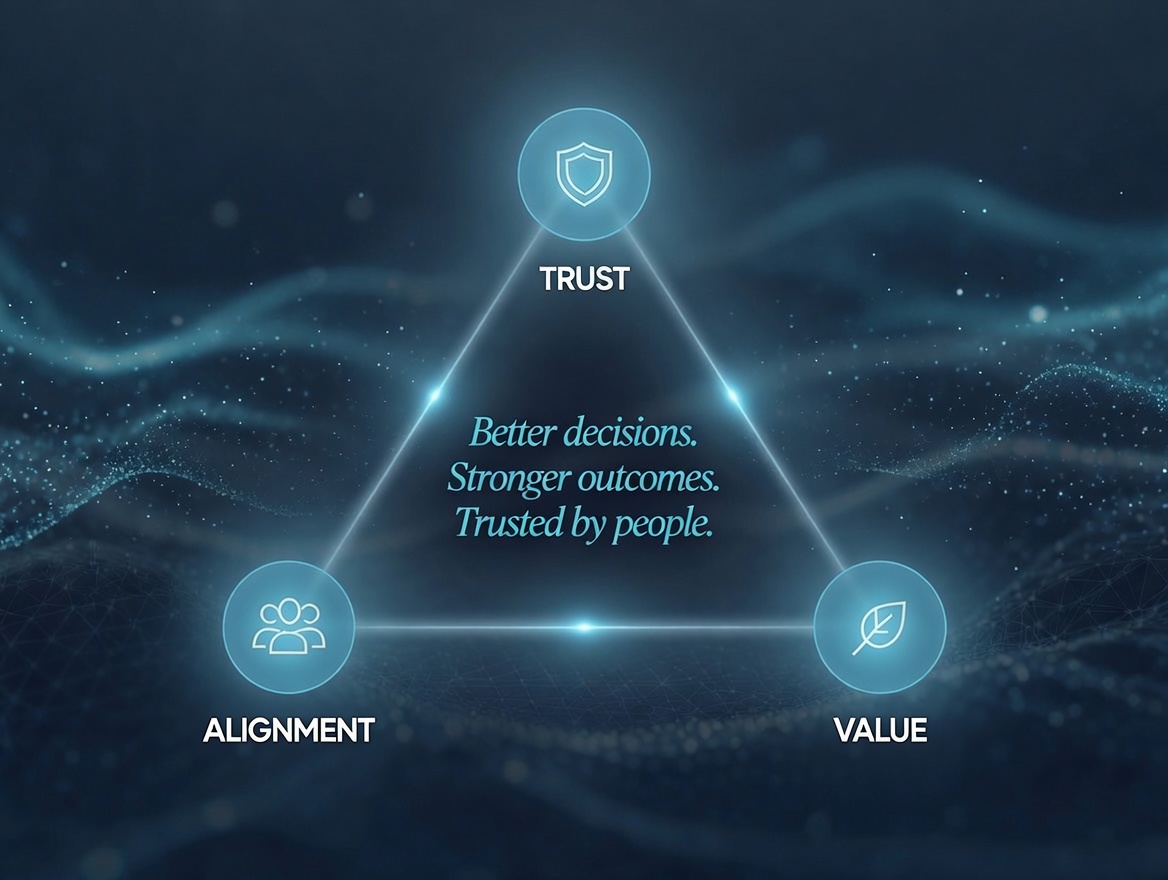
These three elements form the foundation of the VAT Methodology™-a framework for making organisational decisions that actually hold up under pressure, whether you're navigating strategy shifts, resource allocation, or major change initiatives.
Value means understanding what matters: the genuine outcomes you're trying to achieve, not the activities that make you look busy. It's about clarity on impact. Many organisations confuse motion with progress. The VAT Methodology cuts through that by forcing the question: what does success actually look like here, and how will we know when we've reached it? This clarity becomes your decision-making north star.
Alignment is ensuring the people involved—stakeholders, teams, leadership—are working toward the same understanding. Misalignment is expensive. It shows up as rework, frustration, and wasted effort. It's also invisible until it's too late. Teams executing flawlessly in different directions is still failure. True alignment means shared purpose, not just shared messaging. It means people understand not just what they're doing, but why it matters and how their piece fits the whole.
Trust is the connective tissue. Without it, value and alignment remain theoretical. Trust is built through consistency, transparency, and following through on what you say you'll do. It's earned slowly and lost quickly. In organisations where trust is low, every decision becomes harder, slower, more political. Where trust is present, difficult conversations happen earlier, and people give you the benefit of the doubt.
Apply these three consistently, and your decisions become more coherent. Your teams move faster. Your stakeholders stay with you. Uncertainty remains, but your organisation responds to it with clarity rather than chaos.
This is what we build into our consulting work at MT1L.